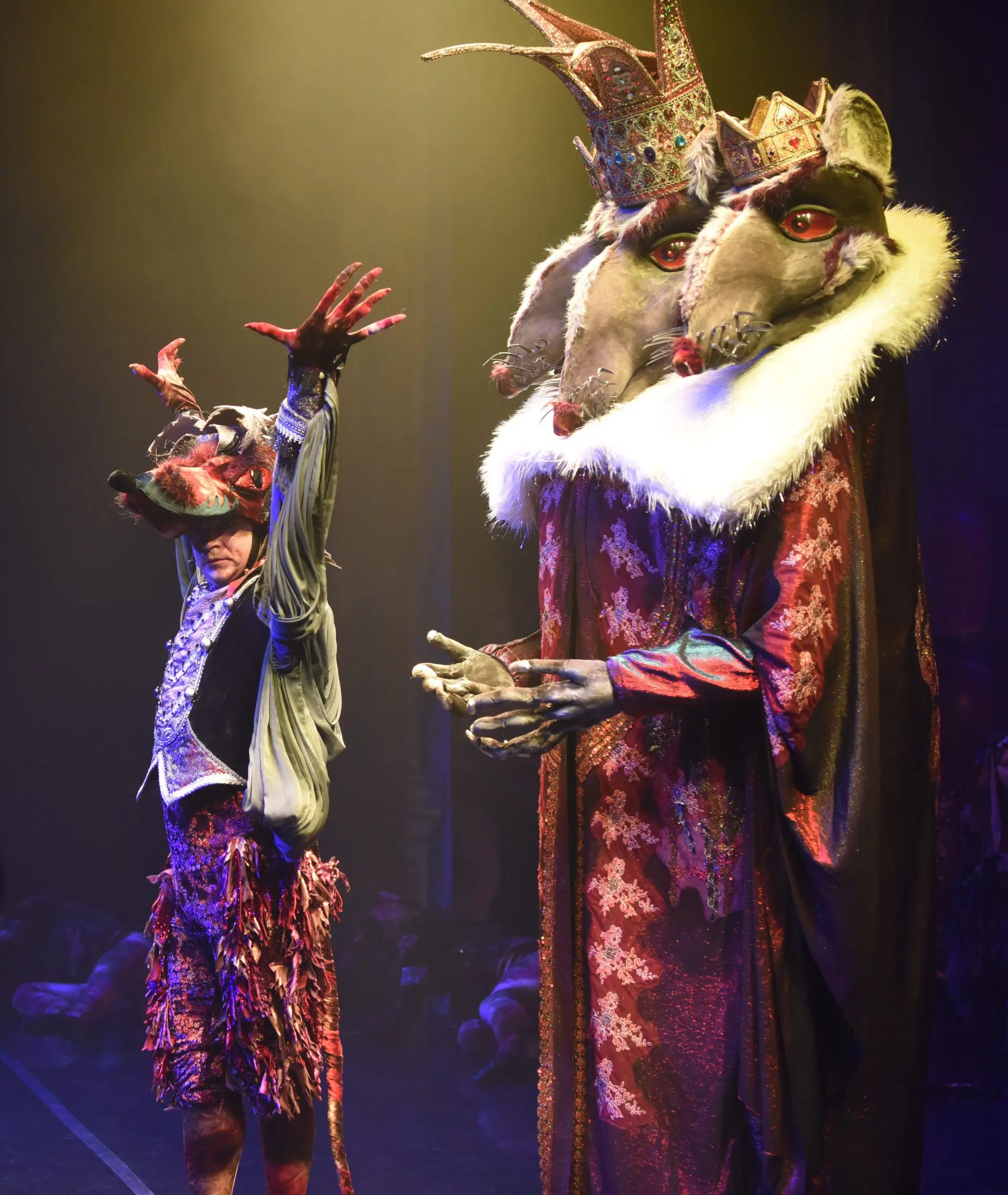
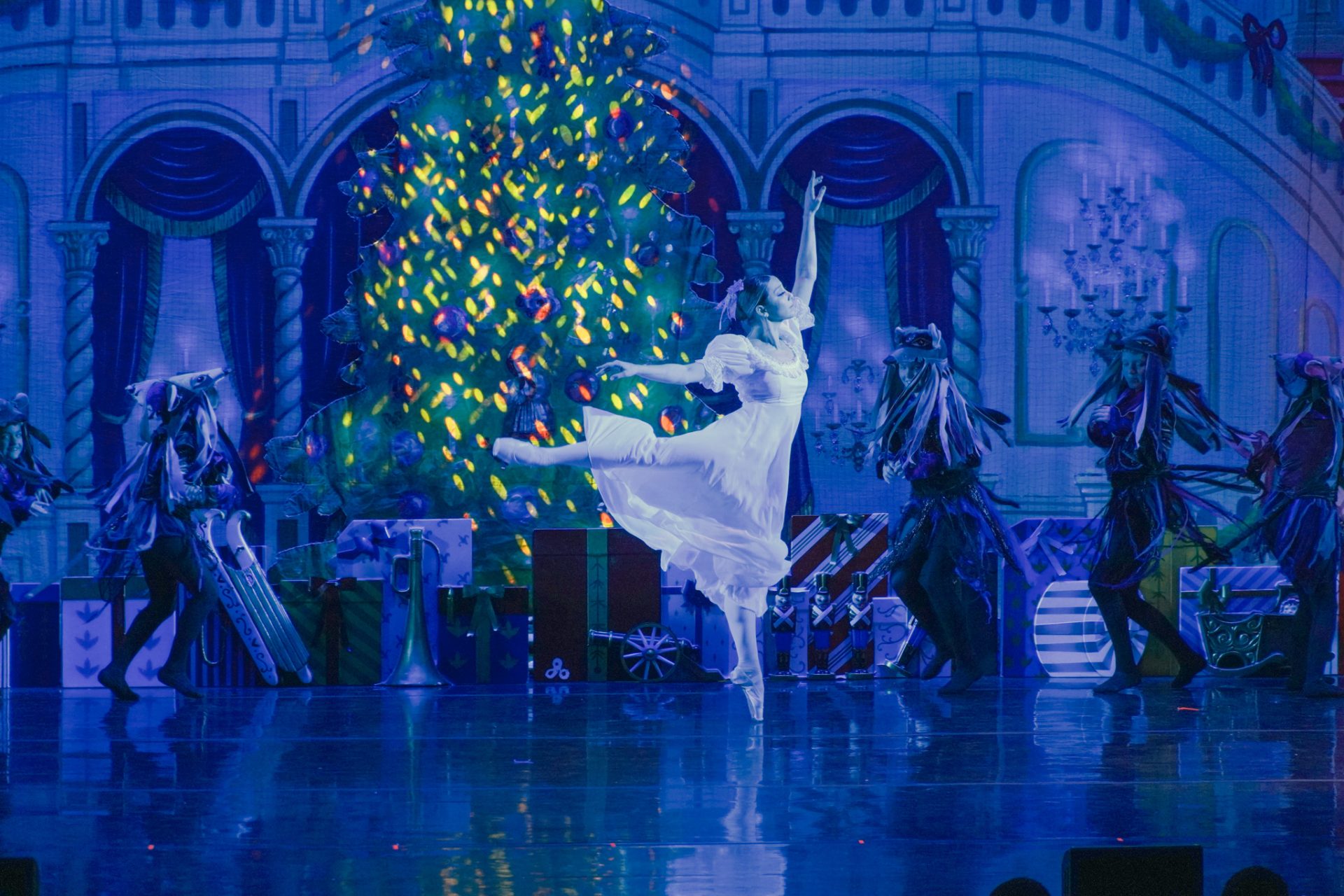
We think of The Nutcracker as a joyful holiday ritual: a ballet of snowflakes, toy soldiers, Christmas trees, and doves of peace. A celebration of childhood wonder that returns each December with almost religious regularity. But listen carefully, and you’ll hear something else. Beneath the glitter and spectacle lies one of ballet’s most haunting scores. Not sad in an obvious way—unlike Giselle or Romeo and Juliet, The Nutcracker offers no catastrophe. Its melancholy is subtler, more personal. It lives in the score’s awareness that beauty is fleeting, that childhood cannot last, and that every magical moment is already becoming a memory. The question is why. Part of the answer lies in the life of the man who wrote it—and in what his life looked like in 1891.
In 1891, Pyotr Ilyich Tchaikovsky was on a triumphant American concert tour. Audiences celebrated him; critics praised him. Yet privately, he was unraveling. “I’m perfectly healthy in body, yet not in spirit,” he wrote. “It’s very difficult for me to be living amongst strangers… I miss those closest to me in Russia, and nothing makes me happy.” The composer who would give us one of ballet’s most enduring holiday traditions was writing from a place of profound loneliness. And once you know that, it becomes difficult not to hear it in the music.
The commission itself did not arrive as inspiration. The Imperial Theatres asked Tchaikovsky to compose a new ballet based on Alexandre Dumas’s adaptation of E. T. A. Hoffmann’s The Nutcracker and the Mouse King—a prestigious assignment, but one that left him cold. He had already elevated ballet music with Swan Lake and Sleeping Beauty, transforming a form long dismissed as decorative into something symphonically serious. The Nutcracker felt like a step sideways, if not backward. “I feel a complete inability to reproduce the Kingdom of Sweets in music,” he admitted in correspondence, referring to the ballet’s second act with barely concealed exasperation. This was not a man driven by creative urgency, but one fulfilling an obligation. And yet, whatever his reservations, he brought his emotional reality into the score.
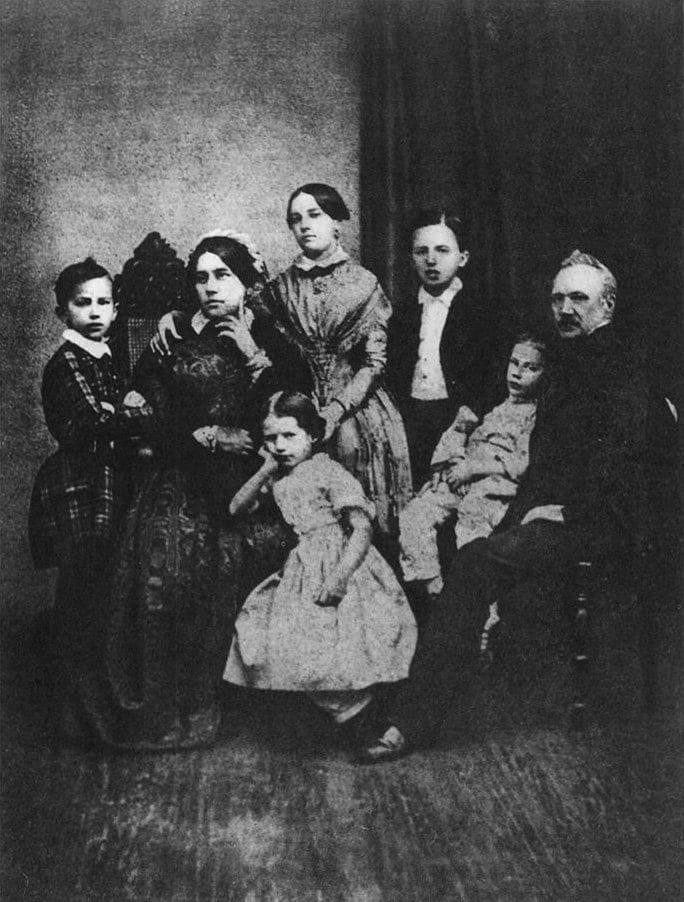
Shortly before departing for America, Tchaikovsky learned that his sister Alexandra had died. Of all his siblings, she had been his closest—the person who knew him most fully, with whom he could be most himself. Her death added to accumulated grief. A decade earlier, the loss of his mentor Nikolai Rubinstein had struck with similar force. “The thought that Nikolai Grigoryevich no longer exists is intolerable,” he wrote in one of many expressions of mourning. Tchaikovsky was not a man who moved lightly through loss; it accumulated. The American tour only sharpened his isolation. However warmly the audiences received him, however enthusiastic the reviews, he remained emotionally unreachable by any of it. “My only consolation consists of letters from Russia,” he wrote. This was the man sitting down to compose a ballet about a girl who dreams her way into a Kingdom of Sweets.

If The Nutcracker has a hidden emotional center, it lives in the Grand Pas de Deux. Few passages in the ballet repertoire are as immediately moving. The melody unfolds with extraordinary patience—unhurried, suspended, as though reluctant to resolve. Its ache comes not from beauty alone, but from distance. It sounds like music reaching toward something just beyond its grasp, yearning for a fullness it can approach but never quite touch. It is the musical expression of longing itself. That quality—not happiness or sadness in their pure forms, but the fragile space between them—is where Tchaikovsky lived as a composer. He was a master of the moment when joy tips into nostalgia, when awareness of an experience’s ending arrives before the experience itself is over.
The Waltz of the Flowers inhabits the same emotional terrain, though less overtly. On the surface it sparkles—generous, sweeping, abundant. But beneath the grandeur runs an undercurrent of wistfulness, a melody already conscious of its own impermanence. It is music that makes you want to hold onto something without quite knowing what. That feeling is not incidental—it is the point.
The Snow Scene works differently, but to similar effect. Amid swirling choreography and winter staging, the music opens into something strangely still—choral voices emerging like distant echoes, the atmosphere hovering between enchantment and loneliness. It is gorgeous in the way certain winter landscapes are gorgeous: beautiful, and almost entirely emptied of warmth.
Even the Kingdom of Sweets carries this resonance when understood biographically. It reads less as celebration than as imagination—a vision of emotional fullness conjured by a man who struggled to inhabit such fullness himself. Tchaikovsky was not writing autobiography; he was composing from the direction of longing rather than contentment.
No instrument captures this more precisely than the celesta. Discovered during a visit to Paris in 1891, its crystalline, otherworldly sound enchanted Tchaikovsky so completely that he became determined to use it himself. He arranged for one to be shipped to Russia and, at first, tried to keep its use in The Nutcracker something of a secret before introducing it in the Sugar Plum Fairy variation. Those notes—delicate, shimmering, gone almost before they arrive—are perhaps the score’s most perfect metaphor. They appear briefly, and vanish. Like memory. Like childhood.
When The Nutcracker premiered in December 1892, the critical reception was divided. Few in that audience could have imagined they were witnessing the birth of what is now among the most performed ballets in the world. Tchaikovsky certainly could not. He died in November 1893, less than a year later—before the sold-out seasons, before generations of children encountering ballet for the first time through Clara’s journey, before any of it. The irony is almost too neat: the work most associated with joy and childhood wonder emerged from one of the most privately painful periods of its composer’s life.
Knowing this does not diminish The Nutcracker; it clarifies its contradictions. The ballet endures not simply because it is spectacular, but because of its musical depth and complexity. Tchaikovsky embedded in it the questions that haunt every life: How do we hold onto beauty? How do we preserve wonder in the face of loss? What remains when the people we love are gone?
He never answered those questions directly. Instead, he translated them into music of such precision and feeling that audiences have been responding to them, without necessarily knowing why, for more than a century. Every December, as the lights dim and the celesta begins, something of that private grief enters the room. The Nutcracker does not offer escape from melancholy. It offers, instead, its total transcendence.
Inspired by the magic of Tchaikovsky’s timeless score, NUTCRACKER! Magical Christmas Ballet brings this beloved story to life with performances for the whole family. Auditions for young dancers ages 6–18 are coming to a city near you. Click here to find performances, auditions, and tickets.