A spooky-season look at ballet’s ghosts, pirates and mischief-makers
While ballet’s canon is replete with queens, princesses, fairies, magic dolls, alongside lovable lads and maidens, some of its most fascinating characters are actually the villains. They range from the mysterious and unknowable to the downright frightening—ghosts, vengeful spirits, pirates, witches and evil sorcerers, just to name a few.
Many of the ballets you see onstage today were created in the 19th century, during or just after the peak of the Romantic movement. Before the Romantic movement, characters on ballet stages were lofty—kings and queens, gods and goddesses—a way for aristocrats to tell stories about themselves to themselves and their subjects. But after the French Revolution, the aristocracy was out of style and regular people, along with their superstitions and beliefs, were in. Ballets were no longer just about an idealized upper class, but about everyday people and the magic they believed in. Suddenly, stages were filled with moonlit forests, sorcerers and other supernatural beings.
These darker figures—from clockmakers dealing in magic and murderous fairies to ghosts bent on revenge—imbue these ballets with their necessary tension and, occasionally, their most exhilarating choreography.
Let’s take a look at a few of our scariest favorites.
The Ghosts
Before we jump into ballet’s ghosts, we should give a nod to one of its oldest witches. La Sylphide (1832) is the oldest full-length ballet still onstage today and is widely thought to be the first full-length ballet performed en pointe. Pointe work, alongside ballet’s illusory lightness, helped make ballet the ideal art form for all of these supernatural characters, and La Sylphide was no exception. In the story, the Scottish hero James falls in love with a magical sylph, but the witch Madge plays a terrible trick on him. She gives him an enchanted scarf that takes away the Sylphide’s wings and her power, and she dies. Madge is often danced en travesti and is a respected character role. Now onward to the ghosts! Giselle is a ballet that is haunting in its beauty, its heartbreak and its vengeful spirits—the Wilis, ruled over by their fearsome queen, Myrtha. Premiering at the Paris Opera in 1841, its second act is considered a crown jewel in ballet’s canon. The Wilis are the spirits of young women who—betrayed by their lovers—died before their wedding day. A story stemming from Slavic folklore, each night they rise from the dead, and any man foolish enough to walk through the forest will be danced to death.
Myrtha is one of the most commanding villains in the repertory and a role coveted by many ballerinas. She is at once authoritative and merciless. She sentences the gamekeeper Hilarion to death and then turns her icy focus to Giselle’s love, Albrecht. Giselle pleads for his life to be spared, but Myrtha will not bend, and the whole forest obeys her. Giselle manages to protect Albrecht by dancing with him through the night until dawn appears and the Wilis are forced to return to their graves.
Giselle’s Act II is what’s called a “white act”—white acts were otherworldly scenes in Romantic and classical-era ballets in which the dancers wore white and often appeared under the moon. In Giselle’s case, with its long tutus and wafting veils, the stage exists at the crossroads of a dreamland and a graveyard. A world away, we have another ghostly realm: La Bayadère’s Kingdom of the Shades.
Nikiya, a temple dancer, is betrayed by her love, Solor, and murdered after Solor’s betrothed, Gamzatti, plots against her. Gamzatti has a basket of flowers given to Nikiya. Beneath the flowers hides a poisonous snake. When Nikiya, unaware that a snake has been hidden inside, reaches into the basket, she is bitten and dies. Similarly to Giselle’s love Albrecht, Solor is grief-stricken by the death of the woman he betrayed. To soothe his heartache he smokes an opium pipe and summons her ghost in a vision. The Shades scene, as it’s often lovingly called, is frequently performed as a standalone work. And like Giselle’s second act, it’s considered one of classical ballet’s choreographic masterworks.


The Pirates
Many of our scary characters aren’t supernatural at all, but real people based on society’s real outlaws. Le Corsaire, premiered in Paris in 1856, is based on Lord Byron’s 1814 poem The Corsair.
Conrad, a pirate captain, is ballet’s answer to classic outlaws—think Hollywood’s swashbuckling John Wayne, or Errol Flynn arrive at the ballet. Conrad is dangerous, loyal to his men and ready to risk it all for the woman he loves, Medora. But it’s Conrad’s lieutenant Birbanto who is the real villain. You see, at Medora’s request, Conrad frees a group of captive women. When he does, Birbanto betrays him, stirs up a revolt amongst the other pirates and plots against his own captain.
Pirates, in their unpredictable adventurousness, are perfect for Halloween’s masks, disguises and hidden treasures. We know that pirates live outside the rules; their swagger, danger and lawlessness give them an air of freedom and rebellion that lends itself beautifully to virtuosic dancing.
In fact, Le Corsaire is known—and loved—for its wild athleticism and is considered a showcase for male virtuosity in a way that many other ballets are not. Sidebar: While the pirates may be spooky, the ways society routinely treated women at the time were the real terror—a conversation for another blog.
The Mouse King
For many of us, The Nutcracker is our first introduction to ballet, and so the Mouse King is our first dancing villain.
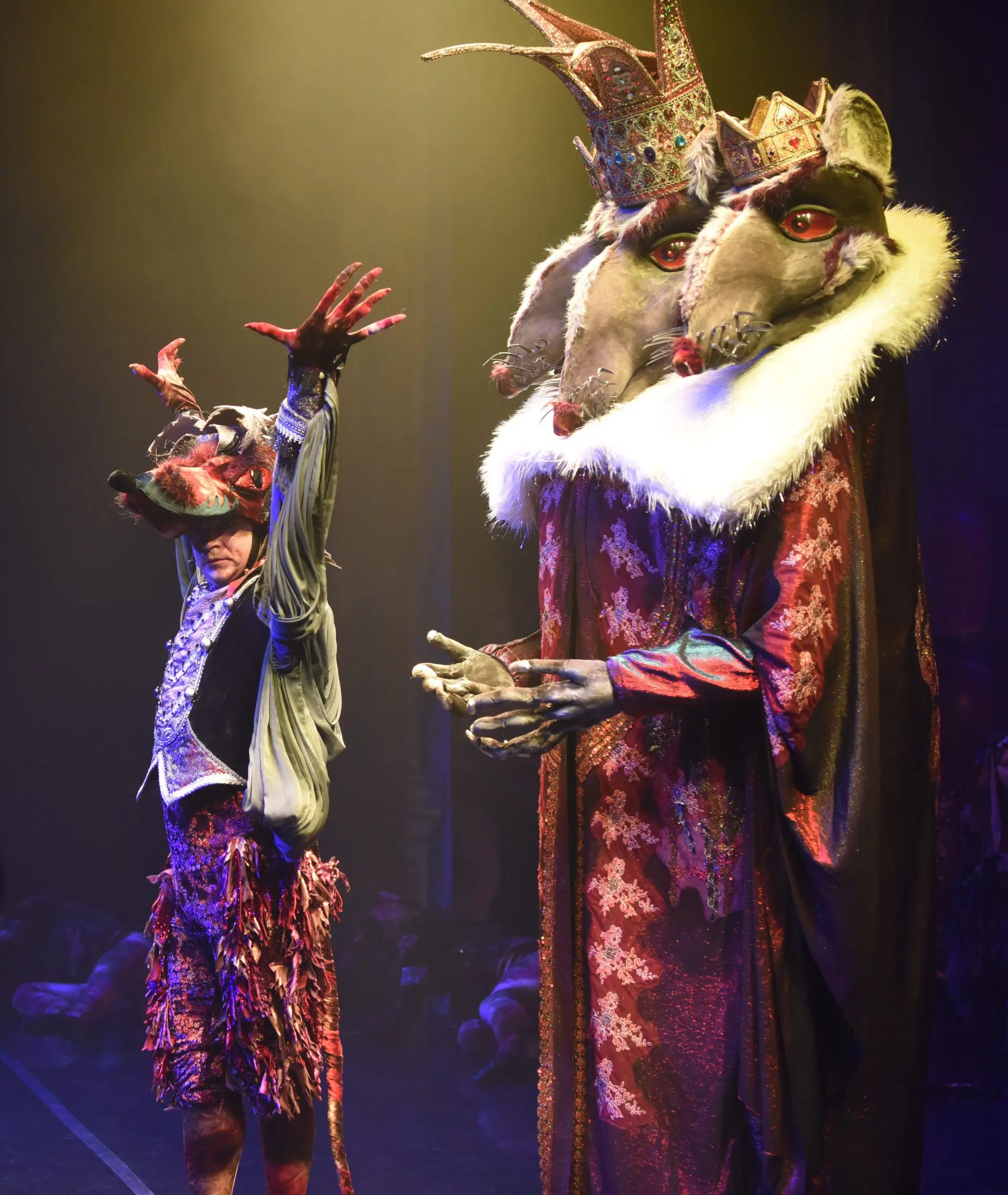
The Nutcracker, first performed in St. Petersburg in 1892 to Tchaikovsky’s score, is based on E.T. A. Hoffmann’s 1816 story The Nutcracker and the Mouse King. In Hoffmann’s version, the Mouse King has seven heads, but it’s actually his mother, the Mouse Queen, who is the real villain. In most versions of the ballet, though, she’s nowhere to be found (another powerful woman written out of the history books), and it’s our Mouse King who gives the story its necessary plot twist.
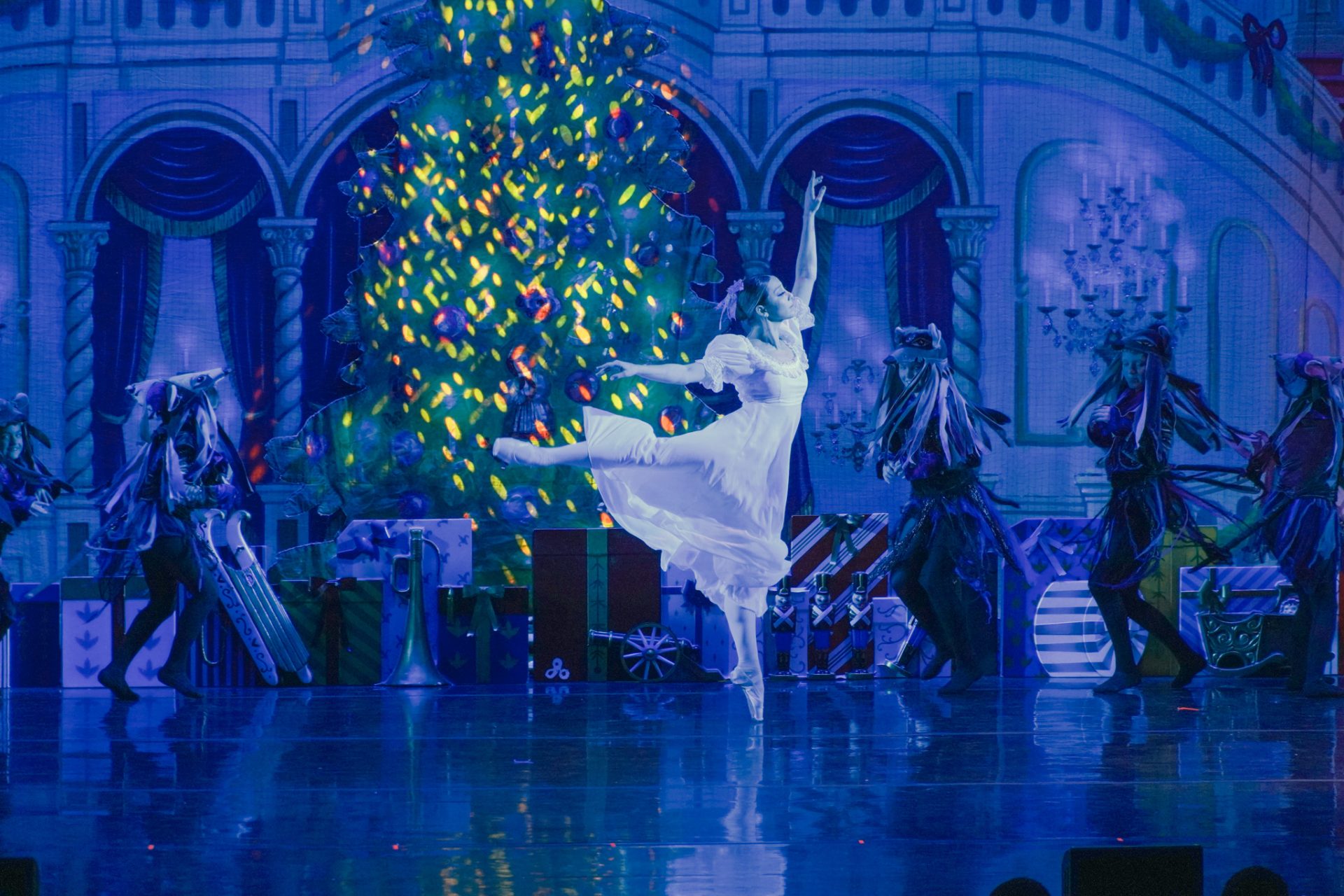
In the ballet, the clock strikes midnight and suddenly, the Christmas tree grows, the room seems to enlarge, and an army of mice attacks a regiment of toy soldiers—now life-size—led by the Nutcracker Prince himself. The fight usually ends when Clara saves the day by throwing her slipper at the Mouse King, giving the Nutcracker just the opening he needs.
The Mouse King is certainly a little frightening, but he is usually more than a little funny. He is, after all, a bumbling, oversized rodent wearing at least one crown. His comedy and his fearsomeness vary from production to production, and his costumes and masks range from the cute to the grotesque. And there are still some productions where you’ll find Hoffmann’s original furry villain, the Mouse Queen, onstage.
But how does the Nutcracker’s tree grow? How do the rodents and tiny toy soldiers become life-size? We can’t walk away from this ballet before talking about one of ballet’s most debated characters: the magical and mysterious Godfather Drosselmeyer. Drosselmeyer is a toymaker, a clockmaker and a magician whose character has a wide spectrum of interpretations across productions. He is always an enigmatic figure, with an eye patch and a penchant for mischief. Let’s take a look at his different sides, and you can decide for yourself whether or not he belongs on this list.
Making the case for spooky: Drosselmeyer seems to control time and is a master of illusions. He
arrives at the party mysteriously, often in a swirling cape. His mechanical dolls come to life, and the magic of the night always seems to start with him. In some productions, he has a much more menacing air—always watching from the shadows as if he’s secretly conducting the scene. And the case for just a quirky Godfather: He is very kind to Clara. He gifts her the Nutcracker, protects it when her brother breaks it, and makes her whole adventure possible. If it weren’t for Drosselmeyer we may not even have our magical journey to the Land of Sweets—or the Land of Peace and Harmony.
Some productions take a direct stance on Herr Drosselmeyer. They may play him as a warm, eccentric uncle who loves to entertain children, while others make him darker, a puppet-master figure pulling the strings of the story. Others still choose not to take a stand, leaving it up to the audience to decide. What do you think?
Honorable Mentions
Here are a few dancing villains who didn’t make our favorites list but who perhaps deserve a feature of their own.
Von Rothbart (Swan Lake): the sorcerer who turns Odette into a swan and sends his daughter Odile to trick the prince.
Carabosse (The Sleeping Beauty): the wicked fairy who curses the baby Aurora. The role was created in 1890 by Enrico Cecchetti and is still often danced by a man.
Kastchei (The Firebird): the immortal sorcerer whose soul is hidden in an egg. When it is broken, his power ends.
Dr. Coppélius (Coppélia): the strange toymaker who tries to bring his doll to life. He comes from another Hoffmann story, The Sandman.
We could do a whole series on ballet’s villains, and maybe we should! In the meantime, who is your favorite? And what did you think of Drosselmeyer the first time you saw The Nutcracker?
Want to decide about Drosselmeyer for yourself? Join us for NUTCRACKER! Magical Christmas Ballet, the beloved touring production coming to a city near you.
TICKETS HERE.