Throughout the 20th century, and into present times, ballet has often been used as a tool of cultural diplomacy. Dance artists and particularly ballet dancers, consciously or unconsciously function as cultural envoys. As ballet, like music, is a universal tongue—an organic translation of the human experience. Weaving through the barriers of political, religious, and cultural divides, fostering exchange and ultimately, cultivating the recognition of our shared humanity.
The dancer then is not merely a performer but a bridge—a figure who moves between cultures, languages, and histories. With its multitude of “dialects” ballet studios and stages become spaces where political divides blur and national borders are crossed without passports. Yet how far removed this expansive role is from ballet’s exclusive and aristocratic beginnings.
How ballet come to exist in a sphere beyond mere entertainment, stepping across borders, political parties, and ideologies?
Ballet’s origins lie in the sumptuous courts of the 15th-century Italian Renaissance. What was then called ballet would appear to us more like modern circus rather than the refined art we now know. Court spectacles combined music, mime, dance, choreographed cavalry, fire-dancers, and theatrical displays. These performances were not simply distractions for royalty, they were subtle yet potent means of storytelling—tales spun to shape the public’s perception of the aristocracy, cloaking power in the fantasy of divine right and luxury. A tool, used to paint those in power in hues of greatness and godliness, to reinforce the values they sought to impose upon the world. This, of course, was not new. For centuries, the arts bent in service of those who held power, as elegant propaganda, whose lavish beauty lent credence to the myth of nobility’s ordained rule.
It was in the late 17th century under the reign of the French King, Louis XIV, that ballet began to congeal into an art form in its own right. With his founding of the Académie Royale de Danse in 1661, Louis set the stage—quite literally—for ballet as we know it. It was here the steps and rigorous techniques were codified, the rules of coordinations developed. Ballet began to blossom, moving through French, Italian, Scandinavian, and ultimately Russian hands (and legs), each set of dancers and choreographers adding to its lexicon. By the late 19th century, Russian ballet, bolstered by the seemingly endless support of the Czar, had emerged as a dominant force, a fusion of Europe’s technical brilliance with the emotional weight and grandeur of Russian storytelling. Works like Swan Lake, The Nutcracker, and Sleeping Beauty became expressions of cultural synthesis that eventually came to embody the heart of Russian classical ballet.
Yet history is a force in constant motion and the 20th century ushered in seismic upheavals—revolutions, wars, and the crumbling of empires. The Russian Revolution and the First World War shattered the (upper class) stability that had facilitated the art form for centuries. Dancers and choreographers who once graced imperial stages found themselves stateless and displaced, refugees from a world that no longer existed. They scattered across the globe like so many seeds, planting ballet wherever they landed.
This artistic diaspora brought forth an unexpected flourishing. George Balanchine, found his way to America, where he founded the New York City Ballet, forever changing the face of the art form. Igor Stravinsky, breaking the rules of harmonic structure helped to reshape both music and dance. Anna Pavlova, whose constant touring brought ballet to the most remote corners of the world—tiny towns and isolated hamlets where few had ever heard of this beautiful dance form. These artists, among others, carried ballet’s torch, seeing that it would thrive far beyond the imperial courts where it had first taken root.
As ballet spread, it began to take on different hues. Each country infused the art with its own spirit, its own dialect. Much like language, the grammar of ballet remained intact, yet it was enriched, deepened by local accents.
Russian ballet became known for its larger-than-life emotion, its grand narratives that seemed to echo the vastness of the Russian soul.
American ballet, under Balanchine, became a leaner, cooler, minimalist expression stripping away the elaborate sets and narrative-heavy structures of 19th-century ballet. Focused instead on purity of movement and the symbiotic relationship between dance and music. It mirrored the frenetic pulse of mid-20th century New York, where life sped forward with a jazz-like intensity, full of dissonance and quicksilver shifts.


Cuba, with its joyful bravura, created a style infused with the warmth and vitality of the island.
British ballet, known for its emotional restraint, embodied a quiet intensity.
France forever retained its elegance and precision. Visionary directors of the Paris Opera Ballet, like Rudolf Nureyev and Brigitte Lefevre, led the way in blending classical technique with contemporary innovation, contributing in huge ways to to its next evolutions.
While now in the 21st century, some of the most exciting dancers and choreographers are emerging from Asia—China, Japan, South Korea—where classical Western techniques meld with local traditions, creating something altogether new.
Globalization has led to a fluid and constant exchange of concepts and styles, thought out all genres of art and in current times of global tension, ballet continues to serve as a form of soft diplomacy. Offering a space where differences dissolve in the shared experience of beauty, symmetry and harmony. In a sense the ballet stage has become microcosm of global culture, blending the histories and traditions of different regions, religions and people. Through artistic collaboration, dancers and choreographers not only enrich the art form but also contribute to a broader understanding and appreciation of cultural diversity amongst audiences and themselves. An historical example is during the Cold War, American and Russian ballet companies toured each other’s countries as part of cultural exchange programs in hopes that art could soften tensions between superpowers, that art might succeed where words and treaties failed. These exchanges allowed artists to connect with audiences on a direct and human level, bypassing political rhetoric to create mutual respect and admiration.
As ballet continues to evolve choreographers are drawing from diverse and sometimes ancient cultural sources. For instance, the works of choreographers Akram Khan and Sidi Larbi Cherkaoui are informed and influenced by their South Asian and North African heritages creating works that fuse classical technique with their own rhythms, gestures, and traditions. These works wholly challenge calcified notions of what ballet is, pushing the boundaries of what it could or should encompass.
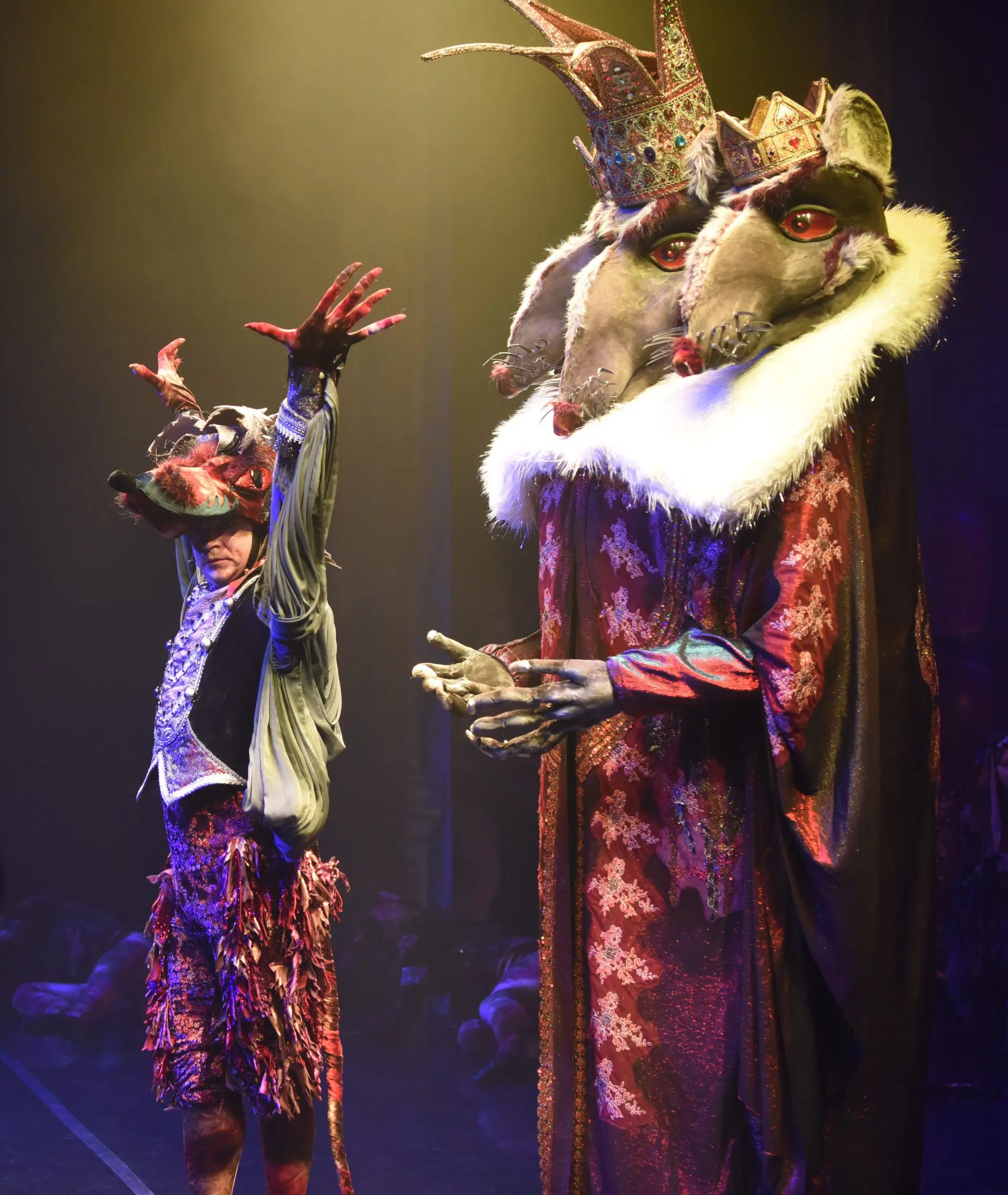
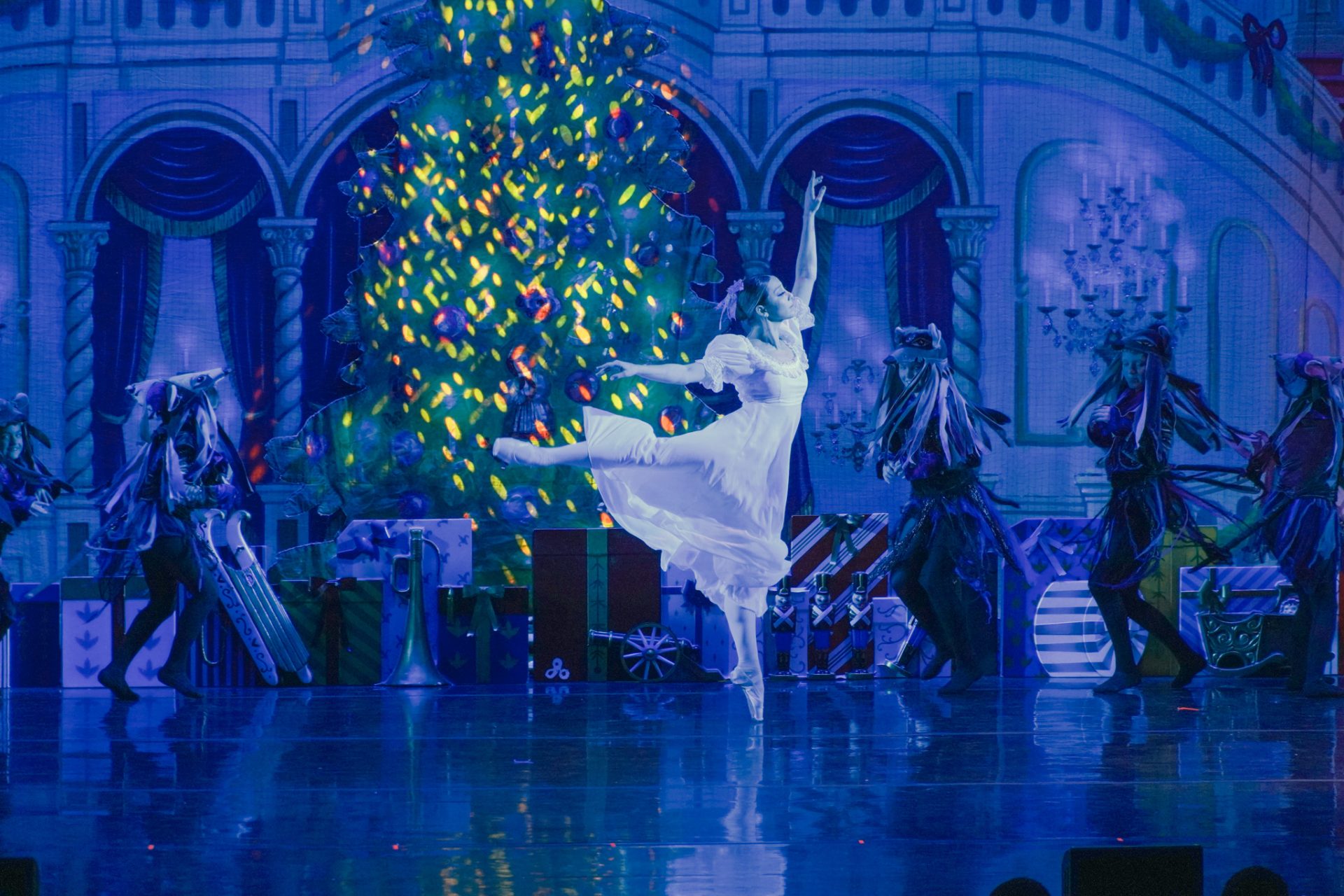
At NUTCRACKER! Magical Christmas Ballet, we embody this spirit of cultural collaboration. Our dancers come from Japan, Italy, England, and Ukraine, uniting their unique artistry and cultural touch to present a fresh interpretation of this beloved classic. Our young Clara’s journey takes her not to the land of sweets, but rather to a land of peace and harmony, where she encounters the Dove of Peace and embarks on an international adventure, meeting dancers from across the globe. In this way, we bring to life the timeless truth that art—like the human spirit—knows no borders. Inviting the audience not merely to watch, but to feel, and to recognize in the dancer’s body the universal expression of joy, sorrow, hope, and love.
Join us for this beautiful production, ideal for the whole family for a performance of beauty, joy and peace. Coming to a theater near you.