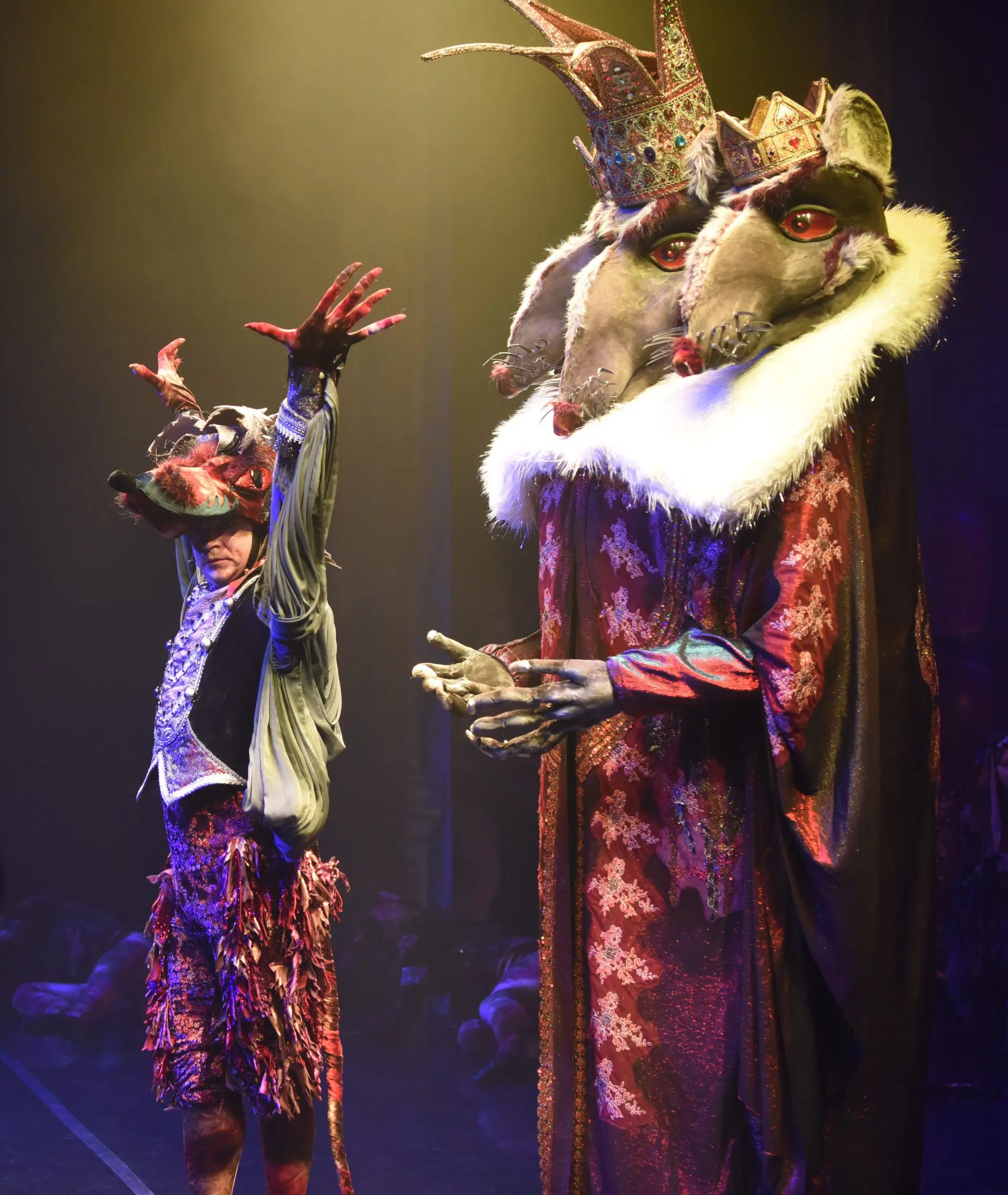
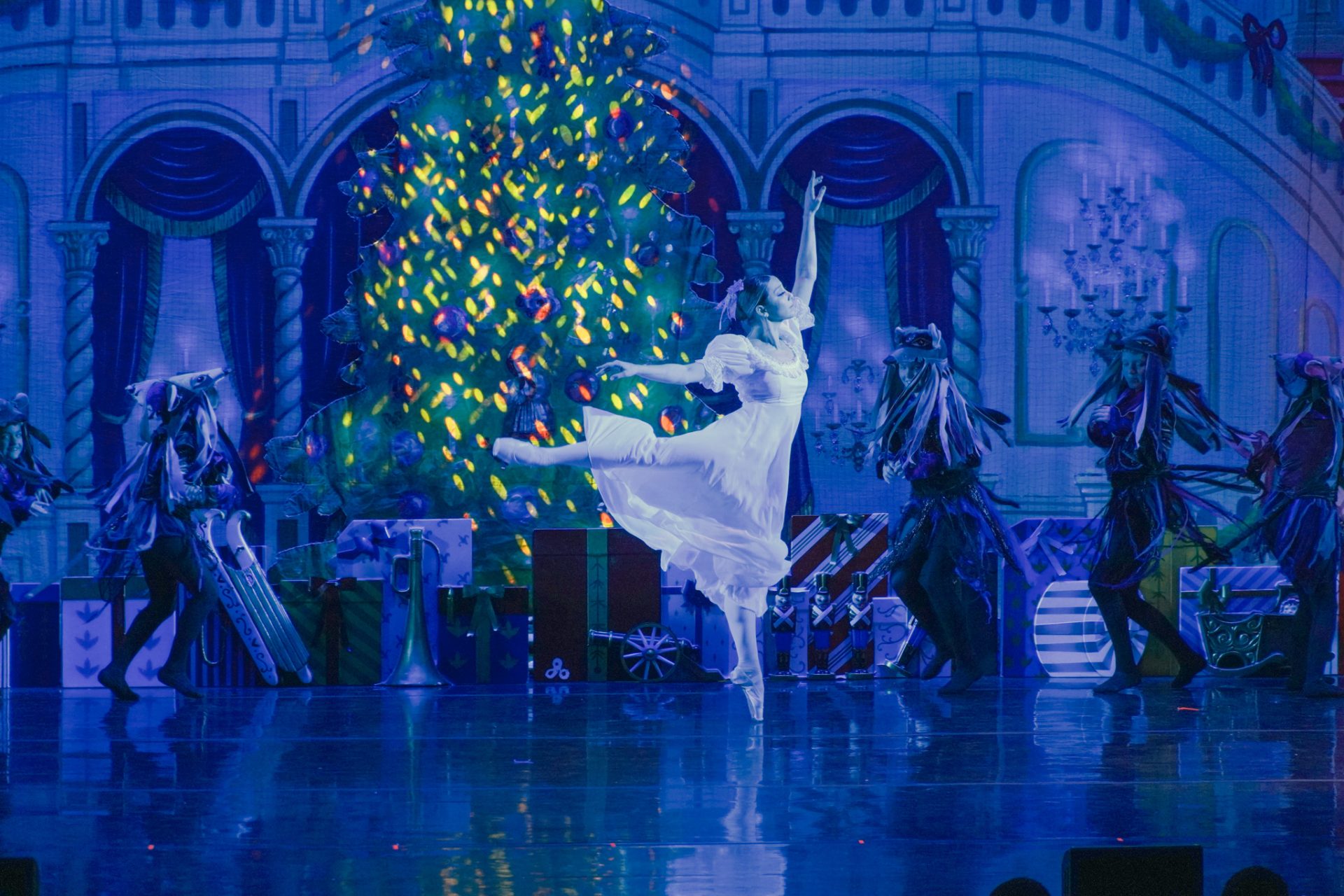
On opening night, audiences see the finished performance. They see the costumes, the music, the excitement, and the confidence of children sharing the stage with professional dancers.
What they don’t see is the six-year-old who has forgotten the choreography three times and keeps trying anyway. They don’t see the child waiting silently for eight counts before entering, the student learning to listen for musical cues, or the group of dancers gradually discovering how to move together without colliding. Those moments are easy to overlook yet they may be the most valuable part of a child’s dance education.
For generations, parents have enrolled their children in dance because it develops coordination, creativity, discipline, or simply because their child loves to move. Increasingly, researchers are finding that dance also supports attention, emotional regulation, executive functioning, and overall wellbeing. But perhaps we’ve been asking the wrong question.
The most important reason children should dance is not that it might help them earn higher grades. It is that dance cultivates the qualities we hope education itself will foster: patience, discipline, empathy, resilience, cooperation, curiosity, and the ability to be fully present with other people. In a culture increasingly shaped by distraction, instant gratification, and digital isolation, those qualities are becoming surprisingly rare.
Learning to Pay Attention
Every dance class asks children to do something increasingly uncommon: to give sustained attention to a single task.
A young dancer must remember choreography while listening to music, respond to corrections, maintain awareness of the dancers around them, and continually adjust their body in space—all at once. Unlike activities that isolate one skill at a time, dance requires children to coordinate memory, timing, perception, emotion, and movement simultaneously.
Psychologists describe these abilities as executive functions: the mental processes that allow us to focus attention, remember instructions, regulate impulses, and adapt to changing situations. Developmental psychologist Adele Diamond, whose work has become foundational in the field, argues that these skills are among the strongest predictors of children’s academic achievement, mental health, and long-term success because they underpin nearly every form of learning.
Dance offers an unusually rich environment in which to practice them. A child is listening, anticipating, adjusting, solving problems, making decisions, and remaining aware of an entire group—all in real time.
Recent research reflects what many dance teachers have long observed. A 2023 study published in Children examined a six-month dancesport intervention for institutionalized children aged 11 to 12. Researchers found improvements in concentration, study strategies, and test-taking effectiveness, while participants also reported lower levels of test anxiety. The authors were careful not to suggest that dance alone guarantees academic success, but the findings suggest that regular dance participation can strengthen many of the habits that support learning.
Perhaps even more importantly, dance teaches children that attention is not something they either possess or lack. It is something that can be cultivated.


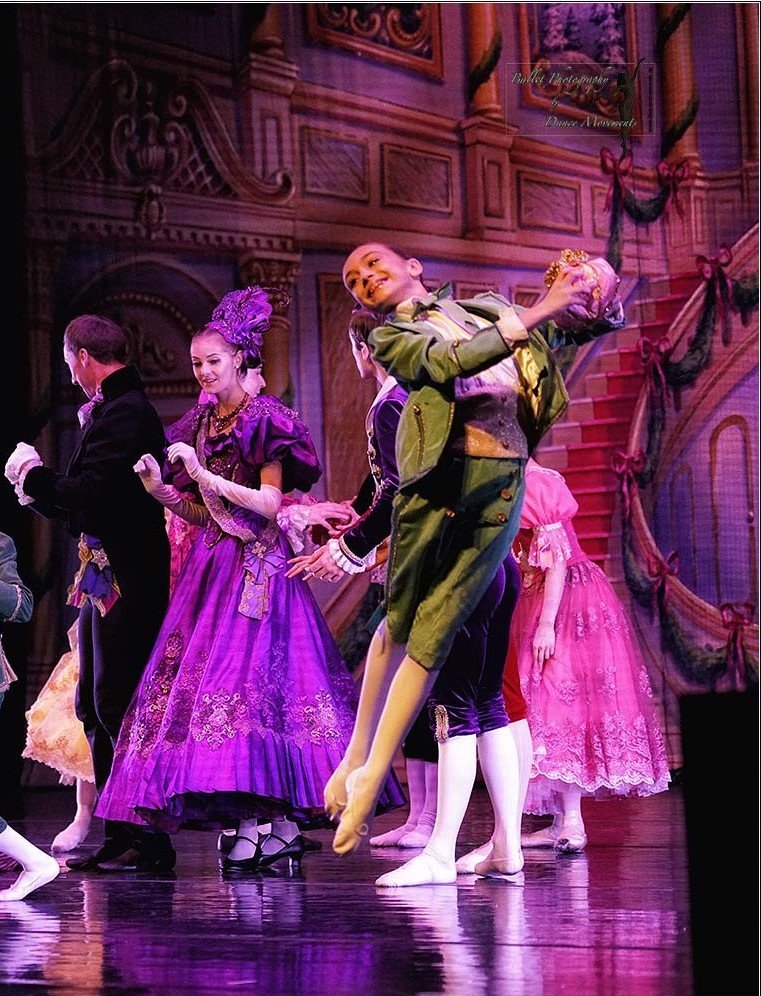
The Virtue of Patience
Perhaps the most radical thing about dance is how slowly progress happens. A pirouette isn’t mastered in one afternoon. Flexibility doesn’t improve after a single class. Musicality develops over months and years. Young dancers quickly discover that repetition isn’t punishment. It is simply how difficult things become possible. That lesson is increasingly important.
Today, much of modern childhood is organized around immediate feedback. A video loads instantly. A game rewards success within seconds. Even many school assignments are divided into short, rapidly changing tasks. Dance operates on a different rhythm. Children rehearse the same sequence dozens of times, receive corrections, make mistakes publicly, and begin again.
The philosopher Aristotle argued that character is formed not through isolated moments but through repeated actions. We become patient by practicing patience. We become disciplined by practicing discipline. Dance gives children hundreds of opportunities to do exactly that.
Each rehearsal becomes an exercise in delayed gratification. The reward is not immediate. It arrives weeks later, when the choreography finally settles into the body or when a child realizes they can accomplish something that once felt impossible. Those are lessons that extend well beyond the studio.
Confidence Isn’t Praise
Parents often hope dance will make their children more confident. But confidence has become one of the vaguest words in education. Real confidence isn’t simply feeling good about yourself.
It is trusting that you can learn. Dance builds that kind of confidence because mistakes are inevitable. Everyone forgets choreography. Everyone receives corrections. Everyone has rehearsals where nothing seems to work. Children gradually learn that failure is not a verdict on who they are. It is information. It is part of the process.
Rather than protecting children from difficulty, dance asks them to move through it. A child walks onto a stage terrified, performs anyway, survives, and discovers that fear and competence can exist together. That may be one of the most valuable lessons dance has to offer.
Learning to Care About Other People
One of dance’s greatest gifts is also one of its least discussed. Dance teaches empathy.
Even beginning dancers must remain aware of other people. They learn spacing, timing, musicality, and how their choices affect the entire group. If one dancer rushes ahead, everyone else adjusts. If someone forgets choreography, others quietly help recover the moment. Success belongs to the ensemble, not simply the individual.
Psychologists studying synchronized movement have found that moving together can strengthen feelings of trust, cooperation, and social connection. Long before children understand those ideas intellectually, they experience them physically. This may help explain why dance often nurtures qualities that teachers notice outside the studio.
A recent scoping review published in the International Review of Sport and Exercise Psychology examined 46 studies of dance interventions in educational settings. Across different countries and age groups, researchers found consistent evidence that dance supports children’s psychological wellbeing, social relationships, and engagement with learning. The review also acknowledged that many studies remain relatively small and that more rigorous research is needed—a reminder that good science often advances cautiously. Still, the broader pattern is difficult to ignore. Dance appears to strengthen many of the personal and social capacities that help children thrive, not only as students but as people, as citizens of the world.
More Than Better Grades
Parents naturally want activities that will help their children succeed in school. Increasingly, evidence suggests dance can support attention, emotional regulation, executive functioning, and classroom engagement. Those findings are encouraging. But perhaps academic performance is the wrong measure.
Education is about far more than producing higher test scores. It is about shaping thoughtful, capable, compassionate human beings. John Dewey famously argued that education is not preparation for life; education is life itself. Dance embodies that philosophy beautifully.
Children don’t practice resilience so they’ll someday know how to be resilient. They practice resilience every time they forget a combination and begin again. They don’t learn cooperation by discussing teamwork. They learn it by sharing space, listening carefully, adapting to one another, and contributing to something larger than themselves. Most children who dance will never become professional dancers, that has never really been the point.
Years later, many will remember surprisingly little of the choreography itself. They won’t remember exactly where they stood during the snow scene or how many counts they held an arabesque. What they will remember is learning to arrive prepared because others depended on them. They will remember working patiently toward something difficult. They will remember standing backstage beside nervous friends and realizing they were part of something larger than themselves. Those memories lodge themselves in the unconscious, a child now knows what it is to be committed to their community, they know what it is to face fear and find joy, they know what it is to overcome again and again.
Programs like Dance with Us are built around that philosophy. For more than three decades, the initiative has welcomed over 75,000 young dancers across North America, giving children the opportunity to rehearse with local studios before joining an international cast in NUTCRACKER! Magical Christmas Ballet. The performance is undoubtedly exciting, but it is only the culmination of weeks spent learning discipline, collaboration, perseverance, and responsibility.


Long after the curtain falls children remember learning to concentrate deeply, to trust their preparation, to recover gracefully from mistakes, and to move through the world with greater awareness of the people around them. Those lessons matter whether a child becomes a dancer, a doctor, a teacher, an engineer, or something else entirely.
This may be dance training’s strongest argument: beyond producing performers, it helps shape thoughtful, disciplined and compassionate human beings.
Join us to witness Clara’s magical inner and outer journey. NUTCRACKER! Magical Christmas Ballet is coming to a city near you. Maybe you’d like to be a part of the show? Auditions are coming up for ages 6-18 through our national Dance With Us partners.
Click for AUDITIONS and TICKETS and see you at the show!
Suggested Sources
Diamond, A. (2013). Executive Functions. Annual Review of Psychology, 64, 135–168.
Tomescu, G., Stănescu, M.-I., et al. (2023). Using Dancesport as an Educational Resource for Improving Institutionalized Children’s Learning Strategies. Children, 10(6), 1039.
Du, M., Hancox, J., Hooper, O., Sandford, R., & Huang, C. (2025). Dancing towards wellbeing: A scoping review of dance interventions for therapeutic purposes in educational settings. International Review of Sport and Exercise Psychology.
Winner, E., Goldstein, T., & Vincent-Lancrin, S. (2013). Art for Art’s Sake? The Impact of Arts Education. OECD.
Dewey, J. Experience and Education (1938); Art as Experience (1934).