Interview with World Renowned Choreographer Viktor Davydiuk
How do dances get made?
A choreographer is almost always a fully trained dancer- from the studio to the stage, they’ll more often than not have spent the better part of their conscious life (usually decades) steeping in their respective dance styles. Perhaps surprisingly, this narrow depth allows them to weave in a myriad of influences from other arts and artists. The creation process is often one that is informed far beyond their own personal experience, encompassing influences from other arts: poetry, paintings, sculpture, past dance makers and sometimes the specific dancers in the room.
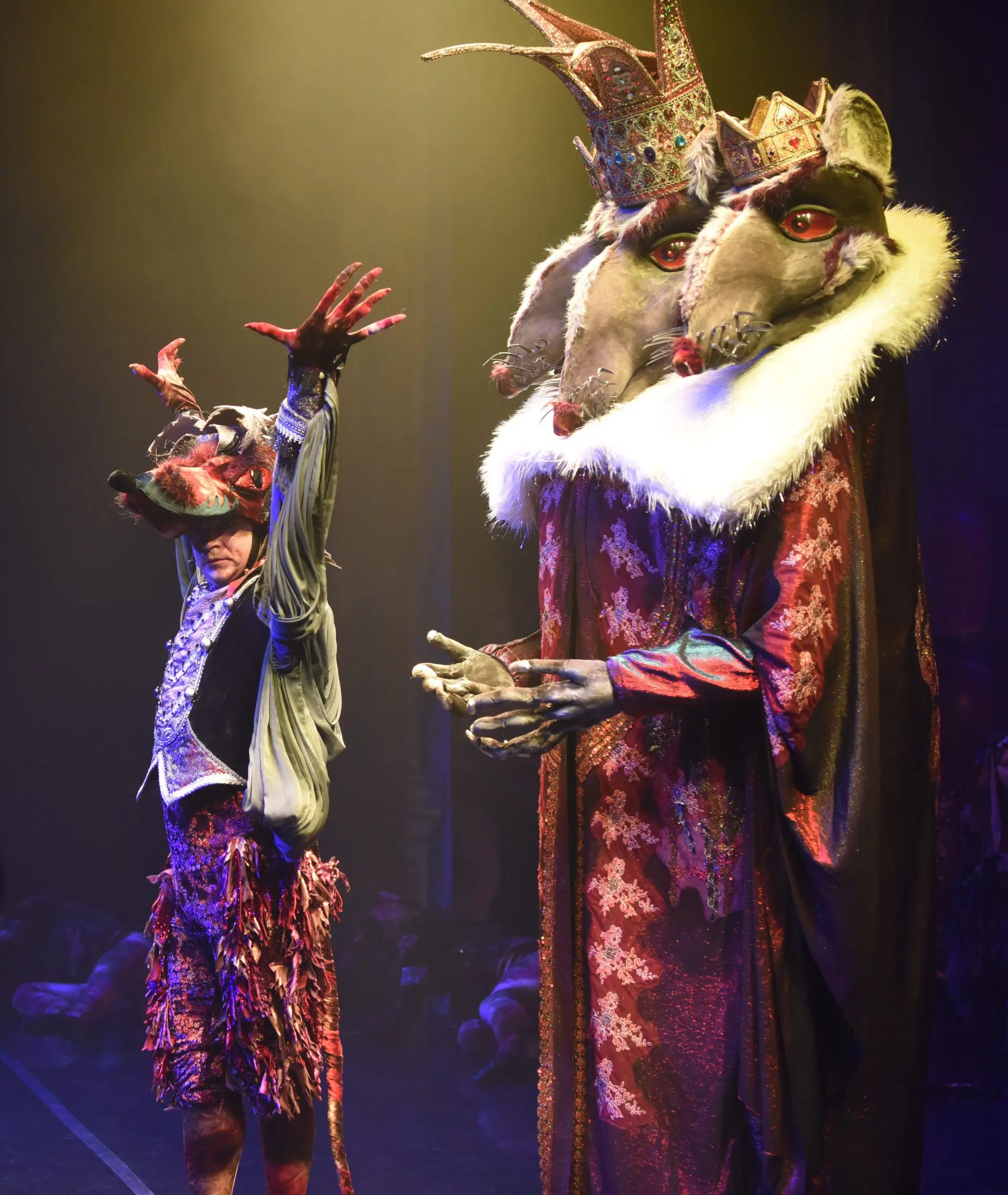
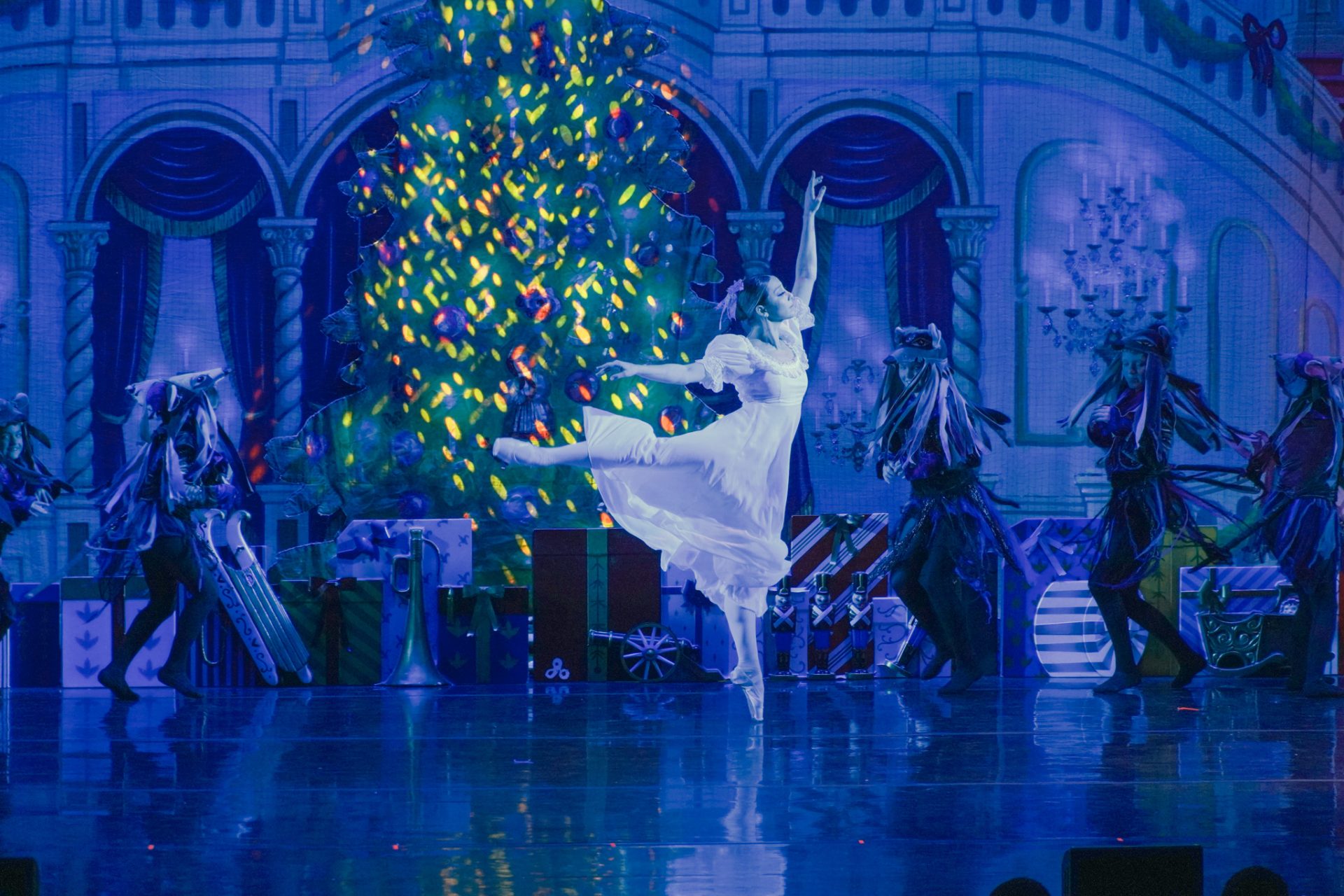
I had a chance to sit down with renowned choreographer Viktor Davydiuk, to talk about his process for making the gorgeous new choreography for NUTCRACKER! Magical Christmas Ballet’s national tour. Let’s take a look at his process and at the lives and legacies of some of his biggest inspirations.
Cynthia: What is your process for creating choreography? Do you work out the steps in your imagination first or it needs to be created directly on the dancer?
Viktor: In general, to start creating, I have to understand the message of the entire performance – its dynamics, where to slow down and where to speed up. Each fragment really needs a unique approach – my understanding of how I see it, what I find interesting, and what I want to express. Sometimes I sketch drawings – stage positions, how dancers should move – and only then do I create the actual movement. There are moments when I prepare the first few combinations, and from there, the entire dance segment evolves.
When working with dances from other cultures, I try to find something authentic – how people from that country behave, how they move, even how they speak. Even if I don’t understand the language, the way they speak can be expressed through movement. That process fascinates me. The most important thing is that it feels fresh – and very often, it ends up closer to the culture than the stereotypical movements.My work is in collaboration with the audience, so I try to put myself in their place. Sometimes I need to change sections of choreography – and this process never ceases to amaze me and make me smile when everything connects into one beautiful picture where the dancer, the music, the lights, the costumes, and the set become one living artwork – and the viewer can feel like part of the magic.
Cynthia: Is it true that your work is in part inspired by Jiří Kylián? Can you tell us more about that?
Viktor: I think most of the artistic world finds this creator inspiring, surprising- and are even driven to create because of him.
For me, Jiří Kylián sets trends in the world of dance, movement and the stage. Emotionally powerful performances enriched by modern technology and drama, with deep meaning in which anyone can find a piece of themselves. Personally, I’m inspired by how fully he devoted himself to his mission. His way of expressing emotion with movement will always stay with me. He creates as he feels, it comes from within him, just like actors in dramatic theatre use words, in his case, it’s all expressed through the movement.
In a Nutshell – Jiří Kylián:
Jiří Kylián, born in Prague in 1947, stands as a towering figure in the world of contemporary dance. Trained at the Prague Conservatory and later at the Royal Ballet School in London, he began his career under the mentorship of John Cranko at Stuttgart Ballet. But it was at Nederlands Dans Theater, where he became artistic director in 1975, that Kylián truly reshaped the landscape of contemporary choreography. His work is marked by striking musicality, poetic imagery, and a profound understanding of the human condition—creating pieces that are at once intimate and expansive. With a repertoire of over 100 ballets, Kylián’s influence echoes through the bodies of dancers across the globe.


Cynthia: Was his work an inspiration for most of this creation or just particular sections?
Viktor: My inspiration for creating the Waltz of the Flowers was George Balanchine. Akiva pointed out this outstanding choreographer to me and suggested I watch the Vienna Waltzes choreographed by Balanchine. After watching them, I already had a direction I wanted to pursue.
In a Nutshell – Balanchine’s Vienna Waltzes:
Choreographed in 1977, is a sweeping homage to the grandeur of imperial Austria. Set to the music of Johann Strauss II, Franz Lehár, and Richard Strauss, the ballet unfolds in five movements. Balanchine’s choreography moves through time, mirroring the evolution of Viennese society and the dance itself. Lavish costumes, shifting landscapes, and richly textured music create a dreamlike world where tradition and modernity waltz side by side. A final bow to the romanticism of old Europe.
Cynthia: Is there anyone else that has been important in the development of your work?
Viktor: Krzysztof Pastor – in my opinion, he is the most outstanding contemporary Polish choreographer.
Using a neoclassical style of dance, he creates large-scale productions in which only the best dancers in the world can fully succeed. I had the opportunity to perform in one of his productions – Dangerous Liaisons, where I played the supporting role of Raphaël Danceny. It was a long process that changed the way I approached movement – minimalism, clarity, the breadth of moving across the stage, how the movement must flow through the body. It was an incredible school for me, and that show will always remain in my heart.
In a Nutshell – Krzysztof Pastor:
Polish-born choreographer of international acclaim. A former dancer with the Polish National Ballet and Netherlands Dance Theatre, Pastor turned to choreography in the 1980s. His ballets often explore political and personal themes, set against rich musical landscapes—from Chopin to Górecki to Radiohead. With appointments including artistic directorships at the Polish National Ballet and Lithuanian National Ballet, Pastor has become a vital voice in European dance, known for creating works that are at once socially resonant and aesthetically refined.
Cynthia: I think people will be curious, what do you look for in a dancer?
Viktor: I look for intelligent people who are interested in other forms of art or related fields, open to the world, and ready to dedicate their whole self to this profession. From my own experience, I know that a dancer’s career is short – so you have to give it your all, dance, and enjoy the applause of the audience, who reward the dancer’s passion.
Join us for a performance!
NUTCRACKER! Magical Christmas Ballet with Viktor’s dynamic and visually spectacular choreography is coming to a city near you. Get your tickets before they sell out.
Written by: Cynthia Dragoni/ The Dance Lens